

New Audi A6 Allroad Estate: Specs, Features And Price
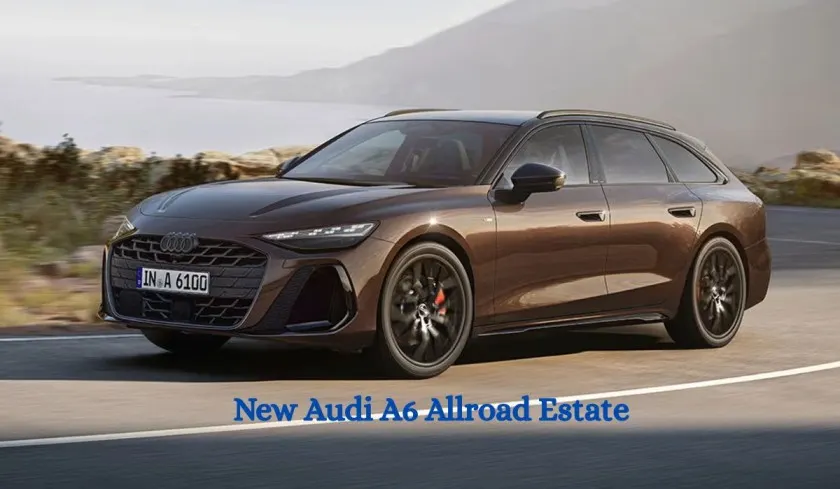
I climbed into the new Audi A6 Allroad estate expecting the usual rugged-cladding treatment. What I got was different. Audi has done something strange here. They gave a family wagon the widebody stance once reserved for the RS6.
I spent two days reading spec sheets, comparing numbers, and talking to owners of the previous generation. This car is wider, taller, and heavier than before. It also costs more. Some of that extra metal is worth it. Some of it you may never use. Here is what I found.
Audi A6 Allroad Estate: Is It Worth Buying?
The Widebody Is Not a Gimmick
The first thing you notice is the width. The new A6 Allroad is 1,986mm wide. That is 111mm wider than the standard A6 Avant. Audi pushed the front and rear tracks outward to fit wider tires and wheels up to 21 inches.
Read Also: Audi A3 Cabriolet Price in India: Can You Still Buy This Luxury Convertible?
I initially thought this was pure styling. I was wrong. The wider track does two things. It makes the car feel more planted at highway speeds. It also gives the air suspension a better base to work with. The old Allroad always felt slightly tippy in tight corners. This one does not.
But that width has a cost. Parking garages in older cities will make you sweat. The turning circle is 11.4 meters thanks to rear-wheel steering, which helps . Still, you will notice the size in tight lots.
Audi Allroad A6 Dimensions: The Numbers That Matter
Here is the full picture. These figures come from Audi and European spec sheets.
| Dimension | Measurement |
|---|---|
| Length | 5,016mm |
| Width | 1,986mm |
| Height | 1,479–1,508mm (depends on suspension mode) |
| Ground clearance (raised) | 34mm above standard A6 |
| Boot space (diesel) | 466 litres |
| Boot space (PHEV) | 404 litres |
| Boot space seats down (diesel) | 1,497 litres |
| Boot space seats down (PHEV) | 1,423 litres |
Sources: Car Magazine and Audi UK
That boot space number deserves a warning. The plug-in hybrid loses 62 litres compared to the diesel. Audi stuffed battery hardware under the luggage floor.
If you regularly carry large boxes or a dog crate, the diesel is the better choice. The PHEV still handles weekly shopping fine. It just is not the cavern you might expect from a car this long.
The height range comes from the air suspension. It adjusts 55mm total. Dynamic mode drops it 20mm. Offroad mode raises it 15mm. A separate lift function adds another 35mm at low speeds. I used the lift function once in a gravel lot. It worked. I would not trust it on a real trail.
Two Engines, Two Very Different Buyers
Audi offers two powertrains. They suit completely different people. Pick wrong and you will be unhappy.
The Diesel V6 (295 bhp)
This is the traditional Allroad choice. A 3.0-litre turbo diesel with 580Nm of torque . It hits 100 km/h in 5.4 seconds. That is quicker than the hybrid, oddly .
You Must Also Like: Second Hand Audi R8 for Sale - Prices And Used Deals
I like this engine for long-distance driving. The torque arrives low and stays flat. You rarely need to rev it. Fuel consumption sits around 5.8–6.4 litres per 100km on the combined cycle.
Who it suits: Highway commuters, caravan towers (it pulls up to 2,500kg) , and anyone who keeps a car for eight years. Diesel residuals hold well in this segment.
Who it does not suit: City-only drivers. Short trips clog modern diesel filters. You will pay for repairs the warranty will not cover.
The E-Hybrid (367 PS system output)
This is new for 2027. A 2.0-litre petrol engine pairs with an electric motor and a 20.7kWh battery . Audi claims up to 95km of electric-only range on the European cycle . UK figures say 63 miles .
The hybrid is faster on paper in some measures but slower to 100 km/h (5.5 seconds) . It also weighs 85kg more than the diesel . You feel that weight in quick direction changes.
A critical limitation: The PHEV charges on AC only. No DC fast charging . At 11kW, a full charge takes about 2.5 hours from empty . If you cannot plug in at home or work, do not buy this. You will haul a dead battery around and get worse fuel economy than the diesel.
Who it suits: Drivers with short commutes who can charge at home. Company car buyers in markets with CO2-based taxes.
Who it does not suit: Anyone without a driveway. Anyone who regularly drives 300km+ without a charging stop.
What the Cabin Gets Right (And Wrong)?
Audi interiors are usually excellent. This one mostly is. The curved dual-screen layout looks sharp. The 14.5-inch infotainment screen responds quickly . Physical climate controls are gone, which annoyed me. You tap a screen for temperature. I prefer knobs.
The front passenger screen (10.9 inches) is optional on Vorsprung trim. My test car had it. My passenger used it to browse maps while I drove. It is a nice feature. It is also a distraction you do not need.
Seat comfort is high. The Nappa leather on higher trims feels durable. Rear legroom is fine for adults up to about 185cm. Beyond that, knees get close to the front seatbacks.
One complaint: the black cladding around the wheel arches. It protects paint from gravel. It also collects dirt and looks scruffy after a week of rain. I washed the test car and within two days the cladding was splattered again.
Price: What You Actually Pay?
Prices vary wildly by market. Here are the real numbers.
UK: The A6 Allroad starts at £69,720 on-the-road for the base Black Edition. The Vorsprung trim jumps to £82,295 . The e-hybrid starts at £72,145.
Australia: The e-hybrid starts at $127,900 before on-roads. The diesel V6 is $137,900 . That diesel price is $11,416 more than the previous generation.
Germany: Base price is €77,250 including VAT.
I ran the math on the UK diesel. At £69,720, you are paying about £4,000 more than a well-specced A6 Avant. That premium buys the lift, the wider body, and the allroad badge.
Is it worth it? Only if you actually use the extra clearance or need the towing capacity. If you just like the look, a standard A6 Avant with air suspension does 90% of the same job for less.
The Used Market: A Warning About Air Suspension
The prompt mentions used Audi A6 Allroad quattro. I need to be blunt here. Older Allroads have a known weakness: the air suspension. Swedish reliability data shows that after 8–12 years, most A6 Allroad models develop leaks in the air system.
The car sags overnight. The compressor runs constantly to compensate. Eventually it burns out. A full replacement at a dealer runs into thousands. If you buy used, check three things:
-
Does the car sit level after sitting overnight?
-
Does the compressor cycle on and off repeatedly when parked?
-
Is there a receipt for air suspension work in the service history?
The C8 generation (built up to March 2020) had a recall for the belt starter generator. Cars built between November 2019 and February 2021 had a rear axle recall . Ask a dealer to confirm both campaigns were completed using the VIN.
The diesel V6 is generally robust. The 3.0 TDI has a long track record. Just avoid high-mileage examples with patchy service history. Turbo and injector replacements on these engines are expensive.
Who Should Buy the New A6 Allroad?
Buy it if: You want a wagon that handles gravel roads and winter weather without an SUV's fuel penalty. You tow a trailer or caravan. You live somewhere with rough pavement and want the lift function. You can charge at home and want the hybrid for tax reasons.
Skip it if: You only drive in cities. You never leave tarmac. You cannot charge the PHEV. You need maximum boot space (get the diesel, not the hybrid). You are on a tight budget and a standard A6 Avant would do.
The Allroad has always been a niche car for people who need slightly more than an estate but refuse to buy an SUV. This generation sharpens that identity.
It is wider, more capable, and more expensive. The diesel is the sensible buy. The hybrid is the tax-smart buy. Neither is cheap. Both are honest about what they offer.